Posts

Think It's Just Dirt? It Could Be a Termite Tunnel

Image
Found a brown, muddy trail running up your wall or around your home's foundation? Don't knock it down just yet! It could be a termite mud tube, a tunnel that subterranean termites build to travel between their underground colony and a food source. These tubes are usually brown or grey, about the width of a pencil or finger, and can appear on brickwork, timber posts, foundations and even inside your home. So, what should you do if you find one? → Leave the mud tube intact. Disturbing it could cause termites to retreat and move elsewhere. → Check nearby timber for hollow sounds, blistered paint or discarded termite wings. → Take clear photos of the mud tube and its location. → Avoid DIY chemical sprays. Killing visible termites doesn't mean you've eliminated the colony. → Arrange a professional termite inspection to find out how far the activity has spread. A single mud tube won't tell you how much damage termites may have already caused behind your walls or under yo...

Mouse or Cockroach? Those Droppings Can Give You Clues

Image
Finding droppings in the kitchen is never a welcome surprise. Your first thought might be mice, but don’t jump to that conclusion just yet. Take a closer look at what you’ve found. Cockroach droppings don’t all look the same. Smaller cockroaches can leave tiny black specks, while larger species can leave dark pellets that look more like rodent droppings. That’s why size alone isn’t enough to identify the pest. Take a look around the area too. Are the droppings tucked around cupboard hinges, behind appliances or near small cracks?  Can you see egg cases or shed cockroach skins nearby?  What about damaged food packaging or gnaw marks that could point to mice? Those surrounding clues can give you a much better idea of which pest you’re dealing with. Read more: https://www.cannonpestmanagement.com.au/cockroach-droppings-look-like/

How Often Should You Get A Termite Inspection?

Image
  Regular termite inspections are recommended even if your home has never had a termite infestation.  Annual inspections are recommended with more frequent inspections for properties located in higher-risk areas.   Schedule a professional termite inspection every year. Keep garden mulch and soil below weep holes. Repair leaking plumbing, gutters and downpipes promptly. Remove timber, cardboard and firewood stored against external walls. Keep subfloor areas and inspection zones clear and accessible. Regular maintenance, moisture control and following the recommendations on your termite management notice can help reduce conditions that encourage termite activity.  Read more for more practical guidance: https://www.standards.org.au/news/australias-termite-management-standard-revised?

5 All-Natural Ways On How To Get Rid Of Ants

Image
  Ants: once they’ve marched into your place, they’re mighty hard to get rid of. Why’s that? Well, consider this: there are a lot of creatures on our planet … but none as populous and hardy as the ubiquitous ant. In fact, scientists think there are at least one quadrillion (yes, quadrillion) ants on Earth – which is 150,000 of the suckers for every single human. And despite our best efforts to keep our homes and spaces clear of their bacteria-coated nippers, ants always seem to slip through the cracks to steal our crumbs once again. So is it pointless to even explore how to get rid of ants? Find out more here: https://www.cannonpestmanagement.com.au/how-to-get-rid-of-ants/

7 Do’s And Don’ts Of Flying Termites

Image
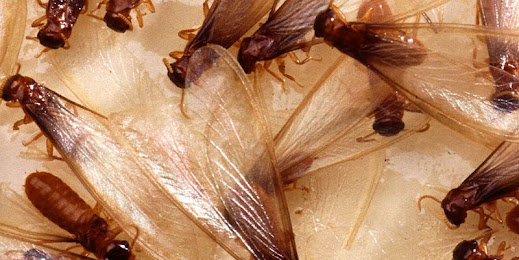
  What’s that you just spotted out of the corner of your eye? Was it just a baby fly? Perhaps a flying ant? Time to get out that can of fly spray. But what if it’s a flying termite? Is it a sign of a termite infestation? Is it time to panic? Most people have heard horror stories about the thousands of dollars damage termites can do to your valuable home or asset. But few know what to look for when it comes to  signs of a termite infestation . If you have spotted termites with wings around your property, you do have a potentially serious issue. That’s why we put together a list of do’s and don’ts when it comes to dealing with that oh-so-worrying of sights: termites with wings. Find out more here: https://www.cannonpestmanagement.com.au/dos-donts-flying-termites/

4 Ways On How To Get Rid Of Bed Bugs

Image
  When you want your little one to pop off to sleep with a hug and a giggle, you always remember to warn them: ‘Sleep tight – don’t let the bed bugs bite!” As ever, the back story is always fascinating. ‘Sleep tight’ is a reference to the way 1800s mattresses sat on beds comprised of woven rope that often had to be re-tightened for a sound slumber. As for the bed bugs, the risk was real – as the tiny little critters just loved those old mattresses stuffed with straw and delicious corn husks. But even today, knowing how to get rid of bed bugs is something you should know. Why’s that? Because across Australia, but especially in Victoria,  bed bugs are still a problem . According to the Victorian government, the problem has gotten a lot worse over the last few years as blood-sucking bed bugs slowly evolved and became more resistant to modern insecticides.  Find out more here: https://www.cannonpestmanagement.com.au/how-to-get-rid-of-bed-bugs/

How To Identify Cockroach Eggs & What To Do

Image
  If you’re one of those few people who think ‘big deal’ when they see a cockroach scurrying across the floor or some cockroach eggs in the back of a cupboard, then think again. Thankfully, most people feel fear and repulsion when they see a cockie, and that instinct is correct. They don’t just reflect terribly on your home or business, cockroaches also: Contaminate your food, expelling bacteria as they go. Reproduce at an astonishing rate – we’re talking hundreds and even tens of thousands of additional cockroaches per female and her offspring. Endanger your brand from the customer point of view, and your business from a regulatory perspective – especially if you’re in the food/hospitality game. Spread diseases through their faeces and saliva (through  cockroach bites ), including terrifying pathogens like salmonella, listeria and campylobacter. Find out more here: https://www.cannonpestmanagement.com.au/identify-cockroach-eggs/